Three commonly used line lasers by Yanjing:
1. Cylindrical/phase lens
2. Powell prism
3. DOE diffractive element
Among them, the first two belong to geometric optics, while DOE belongs to diffractive optics technology, each with its own advantages and disadvantages.
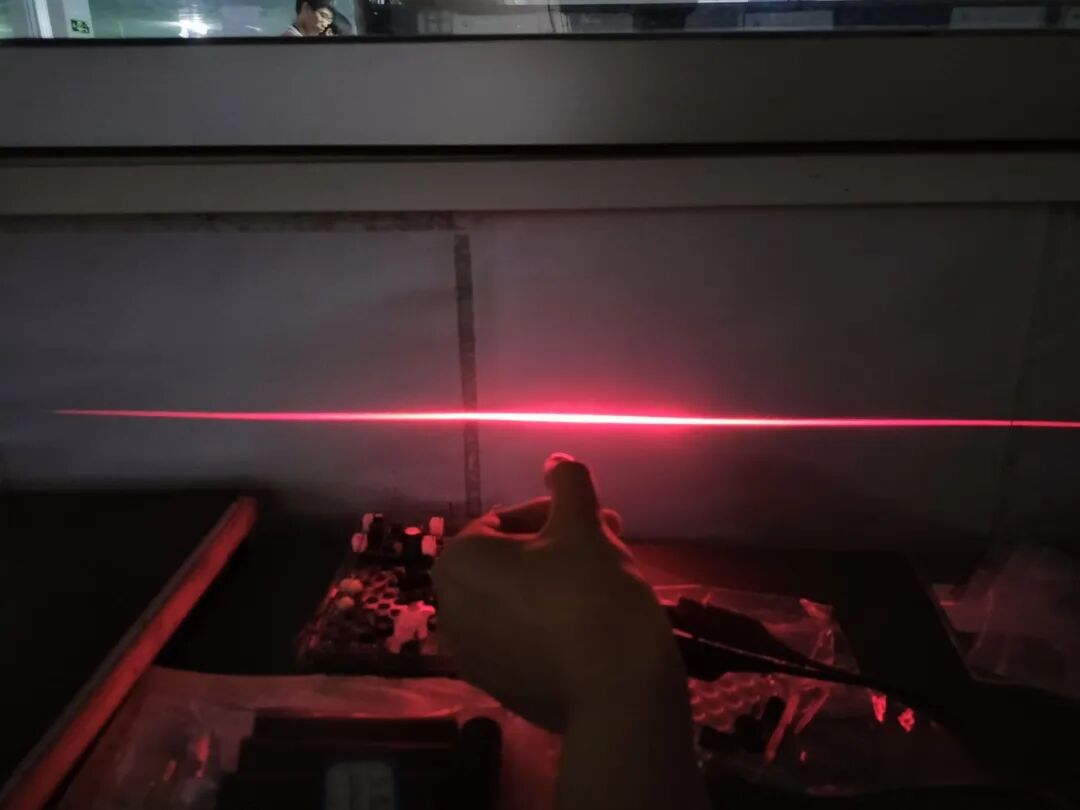
1. Cylindrical lens/phase lens line laser
Advantages: This type of line laser is sufficient to meet user needs in scenarios such as marking rails and other straight-line guidance tasks. Additionally, it is the most common industrial-grade line laser because of its large quantity and low cost.
Disadvantages: Line device quality is inconsistent. For example, the natural characteristic of a cylindrical lens is that the edges gradually darken. A phase lens can be understood as multiple cylindrical lenses connected together to reduce edge darkening. This type of device produces a line laser, but it is difficult for the uniformity to reach above 85%, for example, the ends are prone to break.
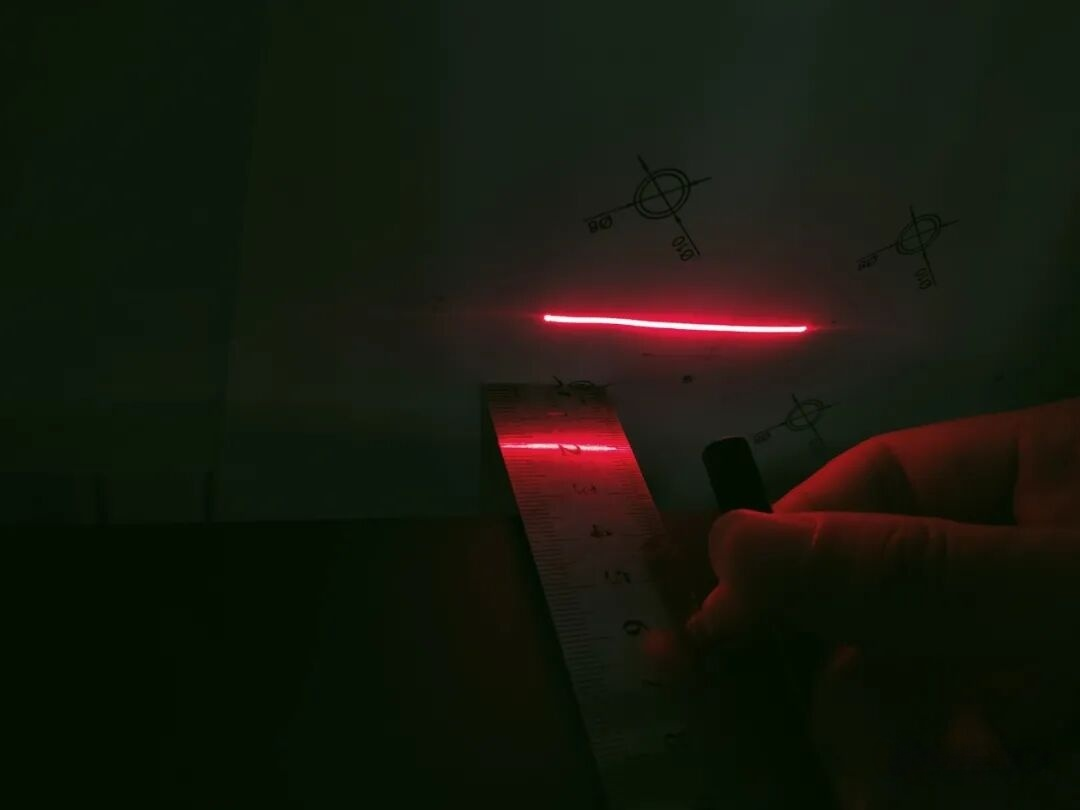
2. DOE Line Laser
Advantages: Ultra-thin, inexpensive
Disadvantages: Prone to central zero-order spots, discrete breaks easily appear on dark objects. This type of device is also an indicator light source. It can be regarded as an indicator light by people, but it cannot be used as a light source for 3D measurement in machine vision.
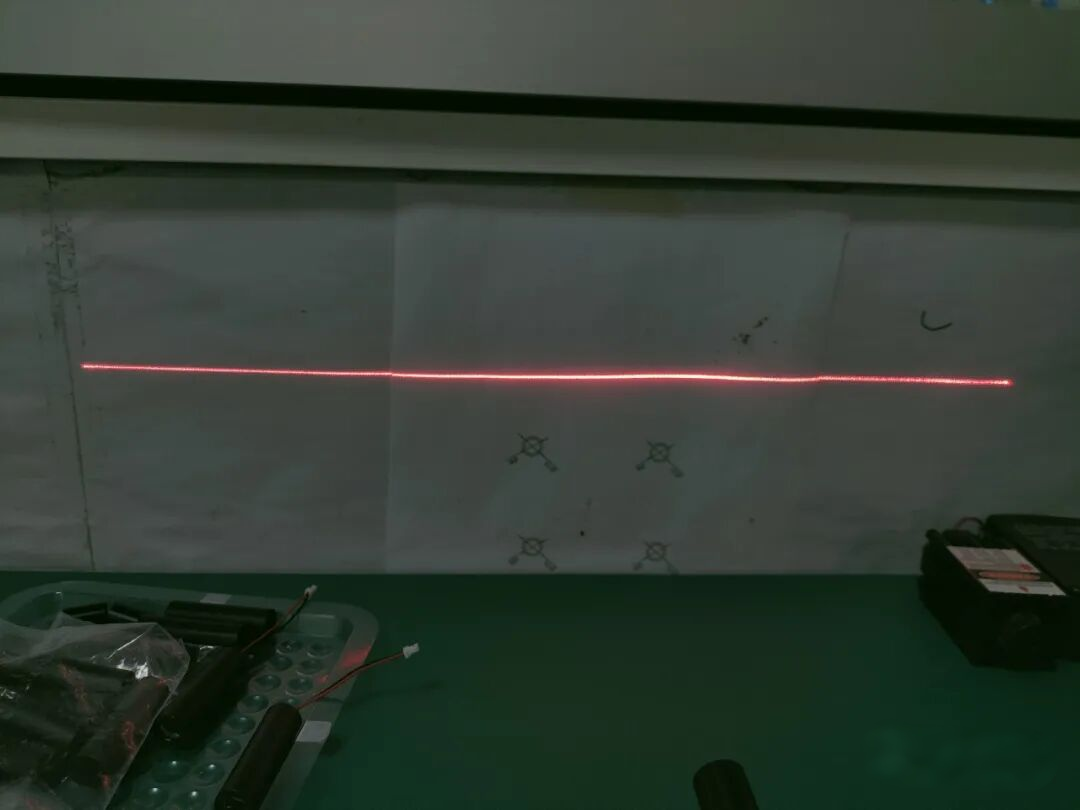
3. Powell Prism Line Laser
Advantages: The processing quality of the Powell prism meets design requirements. By shaping a Gaussian beam into a beam, it can achieve over 95% uniformity, and in the best case, up to 99% uniformity index. It is the best choice to meet the needs of high-end industries.
Disadvantages: The ends may be bright or dark.
The occurrence of such issues depends on the degree of matching between the Powell prism design parameters and the incident beam parameters.
For example: suppose the designed incident spot diameter of the Powell prism is D = 3 mm. If the actual incident beam diameter is R = 3.2 mm, the ends will appear dark. If the actual incident spot is 2.8 mm, the ends will be bright. The greater the deviation, the greater the unevenness. As shown in the figure below, during debugging, a difference of 0.1 mm between D and R can distinguish obvious bumps and depressions.
Therefore, ensuring the matching of the incident spot diameter with the Powell prism is the most important factor for line uniformity.
Yuansight provides point, line, cross line, and 360-line laser modules. Any wavelength, output power, and voltage can be customized according to requirements. For more information, please contact us via austin@tianxiang-laser.com or 86-13761056165.